
The Guardian Middle East
leftREPORTOil price falls to pre-Iran war levels as more tankers exit strait of Hormuz
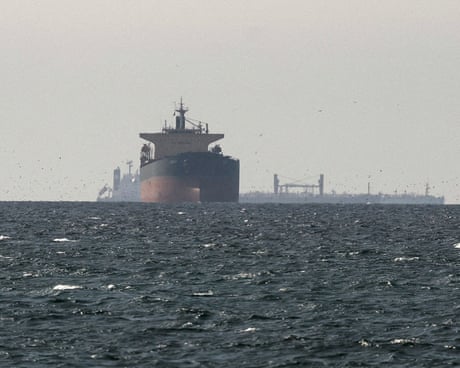
Stock markets on both sides of Atlantic up as concerns ease over prospect of another inflationary shockBusiness live – latest updatesOil prices have fallen to pre-Iran war levels as more oil tankers exited the strait of Hormuz. Brent crude, the global benchmark, fell to a low of $72.
Full BriefGenerated 60d ago
What Happened
Brent crude oil prices dropped to $72.24 per barrel on Thursday, falling below levels recorded prior to the February 28 missile strikes on Tehran by the United States and Israel. According to MarineTraffic data, vessel transit through the Strait of Hormuz doubled over a 24-hour period as tankers resumed broadcasting satellite signals. This shift follows a memorandum of understanding signed last week between the United States and Iran, establishing a 60-day window for permanent peace negotiations. Despite this, regional instability persists; on Wednesday, Israel conducted an airstrike in southern Lebanon that reportedly killed two people, marking the first such incident since a ceasefire took effect on Saturday.
Key Actors
- ·IRGC(Iranian paramilitary force)The group has issued threats against maritime traffic despite the increased movement of tankers near the Strait of Hormuz.
- ·Israel(State actor)Conducted an airstrike in southern Lebanon on Wednesday and participated in the February 28 missile strikes on Tehran.
- ·United States(State actor)Engaged in missile strikes on Tehran on February 28 and is currently negotiating a 60-day interim peace accord with Iran.
Why It Matters
The decline in oil prices reflects a market reassessment of the global energy supply risk following the February escalation between Iran, the United States, and Israel. While the resumption of tanker traffic through the Strait of Hormuz suggests a temporary easing of shipping disruptions, the ongoing diplomatic negotiations and sporadic military activity in Lebanon indicate that the broader regional conflict remains unresolved.
Watch For
Monitor the progress of the 60-day interim peace negotiations between the United States and Iran, as well as the stability of the ceasefire in southern Lebanon. Additionally, observe whether oil prices remain within the projected $60 to $80 range as China potentially increases its market demand and nations begin replenishing strategic reserves.
Generated 60d ago · Based on full articleAuto-Compiled
This page aggregates and summarizes reporting from The Guardian Middle East. The Conflict Pulse does not author original reporting. Read the original source for full coverage.
CONFLICT OVERVIEW
Iran
Latest verified updates on Iran’s regional confrontation, U.S.–Israeli strikes, missile retaliation, proxy networks, sanctions, and Strait of Hormuz risks.
SOURCE PERSPECTIVES
How outlets across the bias spectrum are covering this conflict.
LATEST FROM IRAN

REPORTMiddle East Eye10d ago
Iran formalises Strait of Hormuz control as US struggles to sustain war it launched with Israel

REPORTAl Jazeera10d ago
US threatens ‘indefinite’ blockade against Iran: How long can it last?

REPORTMiddle East Eye10d ago
Morning update
REPORTMiddle East Eye10d ago
Vance says US will end up 'in a stronger position' than Iran

REPORTJerusalem Post — Iran News11d ago
US Treasury Secretary Bessent says US to apply measures 'never seen before' on Iran

REPORTAl Jazeera11d ago