The Guardian Europe
leftREPORTMark Carney is making an eloquent case for an alliance sidelining the US | Ted Widmer
Full BriefGenerated 18h ago
What Happened
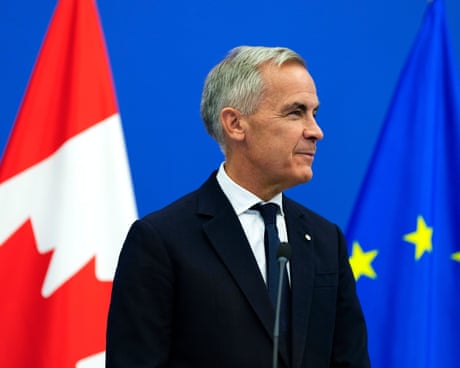
Mark Carney, in a speech before the European Parliament in Strasbourg, proposed that middle powers, specifically Canada and European Union members, strengthen their alliance to preserve sovereignty and open markets amidst a perceived rupture in the global order caused by United States foreign policy. Carney emphasized the need for these nations to act independently to protect their territorial integrity and rule of law, citing concerns over trade disputes and the rhetoric of Donald Trump. In response, Donald Trump dismissed the proposal as laughable and threatened to impose additional tariffs. Concurrently, South Korean President Lee Jae Myung announced that South Korea would not provide military assets or troops for a potential conflict in Iran, citing a shift in strategic alignment as the United States scales back military support in the region.
Key Actors
- ·Mark Carney(Canadian Prime Minister)Advocating for a new alliance of middle powers that operates independently of United States leadership.
- ·Donald Trump(President of the United States)Criticized the proposed alliance as laughable and threatened to impose further tariffs on allies.
- ·Lee Jae Myung(President of South Korea)Stated that South Korea will not contribute military support to United States-led operations in Iran.
Why It Matters
The shift signals a potential erosion of the post-World War II security architecture, as traditional United States allies seek alternative diplomatic and economic frameworks to mitigate the impact of protectionist trade policies and unpredictable executive actions from Washington. The refusal of South Korea to support potential United States military operations in Iran highlights a growing trend of regional powers distancing themselves from United States strategic objectives.
Watch For
Monitor the upcoming United States midterm elections, which may influence the administration's ability to maintain its current trade and foreign policy trajectory. Additionally, observe any formalization of the proposed EU-Canada associate status and further reactions from the European Parliament regarding the security implications of a potential United States withdrawal from traditional alliance commitments.
Generated 18h ago · Based on full articleAuto-Compiled
This page aggregates and summarizes reporting from The Guardian Europe. The Conflict Pulse does not author original reporting. Read the original source for full coverage.
CONFLICT OVERVIEW
United States
Latest verified updates on U.S. military operations, foreign policy decisions, alliance pressure, sanctions, maritime security, and global power projection.
Active since May 2020
SOURCE PERSPECTIVES
How outlets across the bias spectrum are covering this conflict.
LATEST FROM UNITED STATES

DEVELOPINGBBC US & Canada6h ago
What is the White House pool and why is it in a row with Trump?

DEVELOPINGBBC US & Canada10h ago
Major US outlets suspend shared Trump coverage in protest at media ban

REPORTBBC US & Canada18h ago
CNN, MS NOW and Politico file lawsuit against Trump's White House ban
REPORTThe Guardian Africa20h ago
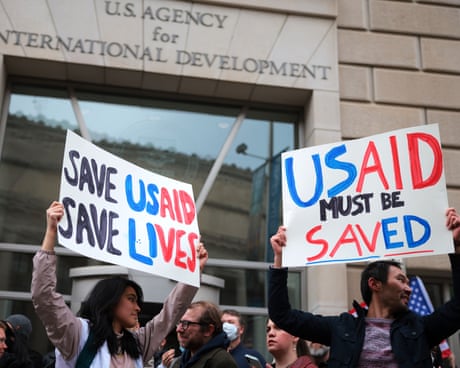
Healthcare in Africa ‘under growing strain’ after US withdrawal from aid programs, report warns

REPORTAl Jazeera1d ago
CNN, Politico, MS NOW sue Trump administration over White House ban

REPORTBBC US & Canada2d ago