The Guardian Middle East
leftREPORTUS hits civilian infrastructure as it expands strikes against Iran
Full BriefGenerated 8d ago
What Happened
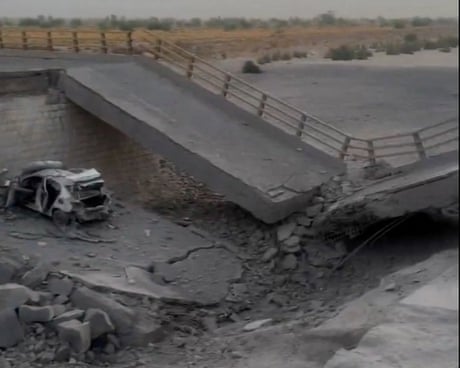
United States forces have initiated a naval blockade of Iranian ports, leading to the boarding of the M/T Wen Yao in the Gulf of Oman and the disabling of an unladen oil tanker. Concurrently, the United States has expanded an airstrike campaign targeting infrastructure across Iran, including bridges in provinces such as Tehran, Semnan, Hamedan, and Hormozgan. Iranian state media reported that these strikes resulted in casualties in Bandar Abbas, including seven wounded in the Allah-Akbar Hill neighborhood and three deaths following a bridge strike. In response, Iran has launched missile and drone attacks against Bahrain, Qatar, and Kuwait, citing the presence of United States forces in those nations. The Islamic Republic of Iran Army claimed to be targeting United States aircraft at a Bahraini airbase in retaliation for the strikes on Iranian infrastructure.
Key Actors
- ·US Central Command(United States military combatant command)Executing a naval blockade of Iranian ports and conducting airstrikes against Iranian infrastructure.
- ·Islamic Republic of Iran Army(Iranian national military force)Conducting retaliatory missile and drone strikes against Bahrain, Qatar, and Kuwait in response to United States military actions.
- ·Houthis(Yemen-based militant group)Threatened to close the Red Sea oil route and target Saudi Arabian facilities if United States strikes on Iranian energy infrastructure continue.
Why It Matters
The collapse of the interim agreement and the subsequent escalation of direct military exchanges between the United States and Iran threaten to destabilize regional energy security. The disruption of shipping through the Strait of Hormuz, coupled with the potential for the Houthis to expand operations in the Red Sea, poses a significant risk to global energy markets and infrastructure.
Watch For
Monitor for further developments regarding the potential closure of the Red Sea oil route by the Houthis and any shifts in the security posture of Gulf Cooperation Council states. Additionally, observe whether diplomatic efforts, such as those mentioned by the Pakistani foreign ministry, can establish a new negotiating channel amidst the ongoing military exchanges.
Generated 8d ago · Based on full articleAuto-Compiled
This page aggregates and summarizes reporting from The Guardian Middle East. The Conflict Pulse does not author original reporting. Read the original source for full coverage.
CONFLICT OVERVIEW
Iran
Latest verified updates on Iran’s regional confrontation, U.S.–Israeli strikes, missile retaliation, proxy networks, sanctions, and Strait of Hormuz risks.
SOURCE PERSPECTIVES
How outlets across the bias spectrum are covering this conflict.
left
US expands Iran attacks as Trump warns Tehran and Houthis over Red Sea strikes
The Guardian Middle EastHow Chinese tech and Russian tactics are aiding Iran’s bombing of US bases
The Guardian AsiaLATEST FROM IRAN