jpost.com
rightREPORTMarco Rubio visits Gulf to pitch Iran deal amid tensions
Full BriefGenerated 1d ago
What Happened
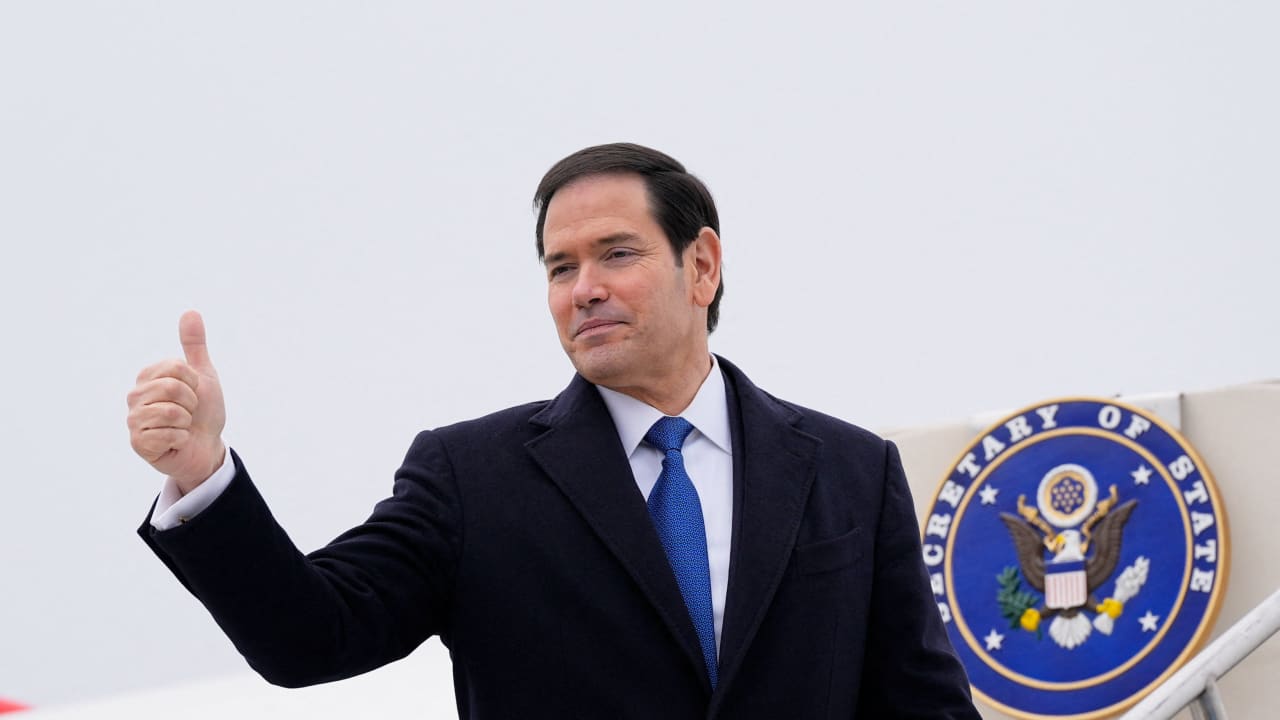
US Secretary of State Marco Rubio embarked on a Gulf diplomatic tour to sell the Trump administration's newly signed Iran memorandum of understanding (MoU) to wary GCC allies. Rubio's itinerary includes meetings in the United Arab Emirates on Tuesday, followed by visits to Kuwait and Bahrain, where he will brief officials from the Gulf Cooperation Council (Saudi Arabia, Qatar, Oman, UAE, Kuwait, Bahrain). The draft MoU — signed by President Donald Trump last week — imposes no limits on Iran's ballistic missile program, proposes a $300 billion reconstruction fund, and includes provisions that Gulf states fear could grant Tehran expanded influence over regional oil shipping lanes, including the Strait of Hormuz. The GCC countries, all of which host US military bases and offered logistical support during the four-month US-Israeli war with Iran, were buffeted by Iranian airstrikes and are privately alarmed by terms they see as strengthening their Shi'ite adversary. Bahraini officials fear a resurgent Iran could stoke unrest among Bahrain's Shi'ite-majority population, while Saudi Arabia and Kuwait worry about Tehran's potential control over critical oil export routes.
Key Actors
- ·Marco Rubio(US Secretary of State)Visiting GCC states to promote the Iran MoU and assuage allies' concerns without publicly criticizing the accord.
- ·Gulf Cooperation Council states (UAE, Saudi Arabia, Bahrain, Kuwait, Qatar, Oman)(Regional alliance of six Gulf monarchies hosting US military bases)Privately shocked by MoU terms that omit missile limits and risk empowering Iran, while relying on US security guarantees.
- ·Donald Trump(US President)Signed the MoU and remains firmly committed despite criticism from Republicans in Congress and Gulf allies.
Why It Matters
The MoU risks alienating the US's key Gulf partners, whose military bases underpin America's security posture in the Middle East. Any re-evaluation of these relationships — even subtle shifts — could degrade US force projection and influence. Moreover, the deal's omission of missile curbs and its proposed $300 billion fund threaten to embolden Iran's military and proxy networks, directly endangering Gulf energy security and potentially destabilizing Bahrain's sectarian balance, while appearing to concede Iranian influence over the Strait of Hormuz.
Watch For
Immediate outcomes from Rubio's meetings in Abu Dhabi on Tuesday, and later in Kuwait City and Manama; any joint GCC statement or individual nation's reaction to the MoU. Monitor US congressional pushback, especially from Republicans, and whether the administration adjusts terms. Track Iranian actions post-MoU, including any acceleration of ballistic missile development or proxy activity, and watch for IAEA reports on nuclear compliance. The reconstruction fund's disbursement timeline and conditions will be a critical indicator of the deal's implementation.
Generated 1d ago · Based on full articleAuto-Compiled
This page aggregates and summarizes reporting from jpost.com. The Conflict Pulse does not author original reporting. Read the original source for full coverage.
CONFLICT OVERVIEW
Iran
Latest verified updates on Iran’s regional confrontation, U.S.–Israeli strikes, missile retaliation, proxy networks, sanctions, and Strait of Hormuz risks.
SOURCE PERSPECTIVES
How outlets across the bias spectrum are covering this conflict.
LATEST FROM IRAN