
The Guardian Middle East
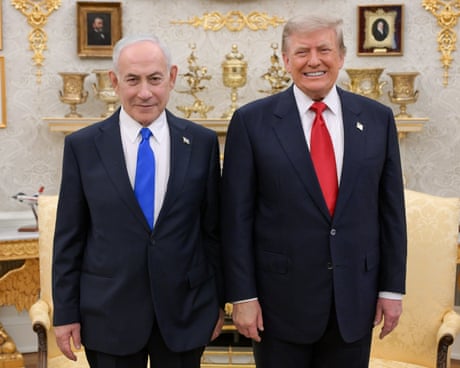
leftREPORTNetanyahu rejects US-led 15-point Gaza peace plan in rare public break with Trump
Full BriefGenerated 14d ago
What Happened
Israeli Prime Minister Benjamin Netanyahu publicly rejected a US-backed 15-point peace plan for Gaza proposed by President Donald Trump's Board of Peace in July. The plan mandated Hamas disarm in exchange for a full Israeli military withdrawal and a transition of power to an independent Palestinian National Committee. In a statement on Sunday, Netanyahu insisted that 'the IDF will not carry out any withdrawal until Hamas is disarmed,' demanding complete removal of heavy and light weaponry. His direct and forceful rejection targeted the Trump administration, marking a rare public break. Israel had previously signalled it would not back the plan, stepping up its bombing campaign after Trump's announcement, with strikes killing 18 people on one Sunday. Netanyahu's stance comes as he faces tough October elections and pressure from hardline coalition partners, while Trump seeks to broker peace ahead of midterm elections to stabilise oil prices and the Strait of Hormuz.
Key Actors
- ·Benjamin Netanyahu(Prime Minister of Israel)Rejected the US-led peace plan, demanding full disarmament of Hamas before any Israeli withdrawal, and publicly rebuked US pressure.
- ·Donald Trump(President of the United States)Proposed the 15-point peace plan through his Board of Peace and seeks to broker peace, but faces Netanyahu's public refusal.
- ·Hamas(Militant group governing Gaza)Required to disarm under the plan; Netanyahu's precondition targets their complete disarmament before any deal moves forward.
Why It Matters
The rejection is a major setback for US-led peace efforts in Gaza and underscores tensions in the US-Israel alliance. Both leaders face domestic political pressures: Netanyahu is gearing up for October elections with hardliners in government, while Trump hopes to deliver peace to influence midterms and address oil prices via the Strait of Hormuz. The public break highlights Israel's role as a stumbling block in Trump's broader regional peace goals, including Lebanon and Iran. The outcome could reshape the US-Israel relationship amid shifting American public opinion, with some Republicans openly skeptical of Israel's war and erosion of support in the Democratic Party.
Watch For
Monitor whether Trump increases pressure on Netanyahu or allows the peace plan to stall, especially as both face elections in October. Watch for further Israeli military operations in Gaza and any responses from Hamas or mediators. Also, track parallel US efforts in Lebanon and Iran, as the conflicts are interconnected, and any movement on those fronts could influence the Gaza dynamic. Statements from US Vice President JD Vance regarding Israel may signal emerging Republican skepticism.
Generated 14d ago · Based on full articleAuto-Compiled
This page aggregates and summarizes reporting from The Guardian Middle East. The Conflict Pulse does not author original reporting. Read the original source for full coverage.
CONFLICT OVERVIEW
Israel–Palestine
Latest verified updates on Gaza, the West Bank, Israeli military operations, Palestinian politics, humanitarian conditions, and international diplomacy.
Active since May 1948
SOURCE PERSPECTIVES
How outlets across the bias spectrum are covering this conflict.
LATEST FROM ISRAEL–PALESTINE

REPORTAl Jazeera9d ago
Analysis: Israel’s government can’t disown West Bank settler violence

REPORTMiddle East Eye9d ago
France condemns Israeli settlers’ seizure of Palestinian homes in Qusra

REPORTMiddle East Eye9d ago
Netanyahu brands Britain an ‘Islamic republic’ as it prepares Israel sanctions

REPORTAl Jazeera9d ago
Kushner to visit Israel after Netanyahu rejects Gaza Board of Peace plan

REPORTMiddle East Eye9d ago
‘De facto annexation’: Israel to shift civilian enforcement in West Bank from army to police
REPORTMiddle East Eye9d ago