DW News
centerREPORTIs the Iran war weakening the US' superpower status?
Full BriefGenerated 7d ago
What Happened
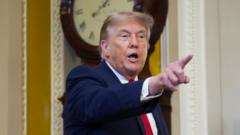
On June 16, 2026, US President Donald Trump announced a deal with Iran to end a conflict launched jointly with Israel over three months prior. Trump said he had 'fully authorize[d] the toll-free reopening of the Strait of Hormuz,' with a memorandum of understanding (MoU) to be signed in Geneva later that week. Unconfirmed reports in pro-regime Iranian media, specifically Fars news agency, claimed that 'Iranian-Omani sovereignty over the Strait of Hormuz' had been added to negotiations and that the US had 'accepted' that fees would be paid to Iran. Vice President JD Vance told CNBC that Washington's 'expectation is that the strait is going to be opened in a toll-free way for the long term' but acknowledged technical negotiations are ongoing. The conflict saw US and Israeli airstrikes degrade Iran's conventional navy and leadership, yet Iran used drones, mines, and small boats to effectively block the strait, extracting concessions.
Key Actors
- ·Donald Trump(President of the United States)Announced a deal with Iran and authorized the toll-free reopening of the Strait of Hormuz, though details of the MoU remain undisclosed.
- ·JD Vance(Vice President of the United States)Stated the US expectation for a long-term toll-free strait but admitted details are still being negotiated.
- ·Iran(State actor)According to unconfirmed Fars news reports, is negotiating sovereignty and fee extraction over the Strait of Hormuz; its asymmetric warfare tactics granted it leverage despite military losses.
- ·Rebecca Lissner(Senior fellow at the US Council on Foreign Relations)Assessed that the war exposed the limits of US power, showing America's inability to convert military prowess into strategic victory and weakening its superpower status.
Why It Matters
The war and its outcome undermine the US role as a guarantor of freedom of navigation and global trade. Iran's ability to shut the Strait of Hormuz through asymmetric means—despite losing its conventional navy—demonstrates that regional actors can hold global energy flows hostage. A deal that grants Iran fees or partial control would set a precedent, raising doubts among Gulf allies about US security commitments and potentially inviting future coercion.
Watch For
The signing of the US-Iran MoU in Geneva later this week and the release of its text, which will clarify whether Iran gains toll-collection rights or sovereignty over the strait. Subsequent technical negotiations on the strait's status. The start of nuclear talks that may be linked to the deal. Reactions from Gulf states, Israel, and other major powers, and any indication of renewed Iranian threats to close the strait.
Generated 7d ago · Based on full articleAuto-Compiled
This page aggregates and summarizes reporting from DW News. The Conflict Pulse does not author original reporting. Read the original source for full coverage.
CONFLICT OVERVIEW
Iran
Latest verified updates on Iran’s regional confrontation, U.S.–Israeli strikes, missile retaliation, proxy networks, sanctions, and Strait of Hormuz risks.
SOURCE PERSPECTIVES
How outlets across the bias spectrum are covering this conflict.
LATEST FROM IRAN