
Jerusalem Post — Iran News
rightREPORTIRGC commander demands US 'correct its behavior' before Strait of Hormuz can be reopened
Full BriefGenerated 61d ago
What Happened
On Friday, IRGC commander Mohammad Bagher Zolghadr declared on Islamic Republic of Iran Broadcasting (IRIB) that the Strait of Hormuz will not reopen until the United States 'corrects its behavior,' laying out six conditions. These include: ending all aggression against Iran, Lebanon, Yemen, Iraq, and Palestine; ceasing verbal threats against Iran; lifting the naval blockade and withdrawing all naval and air forces; paying for war damages; lifting all sanctions; and releasing all frozen Iranian assets. Zolghadr also stated that the Supreme National Security Council 'will never back down, whether in war or negotiation.' On Saturday, the IRGC, through spokesperson Hossein Mohebbi quoted by Tasnim news agency, clarified that the reopening of the Strait is not related to Iran-Oman negotiations but is conditional on the US accepting the six conditions. Concurrently, Iranian Foreign Minister Abbas Araghchi said that Iran and Oman are 'very close' to a new shipping route accord through the Strait, but insisted on compensation for what Tehran calls US violations of the Islamabad memorandum of understanding.
Key Actors
- ·Mohammad Bagher Zolghadr(IRGC Commander)Announced that the Strait of Hormuz will not reopen unless the US meets six specific demands, including lifting sanctions and withdrawing forces.
- ·Hossein Mohebbi(IRGC Spokesperson)Clarified that the Strait's reopening is not linked to Iran-Oman talks but solely to US acceptance of Iranian conditions.
- ·Abbas Araghchi(Iranian Foreign Minister)Stated that Iran and Oman are close to a new shipping route accord while insisting on compensation for alleged US violations.
- ·United States(Target of Iranian demands)Required to 'correct its behavior' by meeting six conditions before Strait of Hormuz reopens, per IRGC commander.
Why It Matters
The Strait of Hormuz is a vital artery for global energy transit, with roughly one-fifth of the world's oil passing through it. The IRGC's direct and public linkage of its closure to US policy signals a heightened willingness to leverage strategic chokepoints, potentially disrupting global markets. The discord between the IRGC's conditions and the Foreign Minister's talks with Oman suggests internal divisions within Iran's power structure, which could complicate diplomatic efforts and increase unpredictability.
Watch For
Watch for any official US response to the IRGC's demands, particularly regarding naval posture in the region. Monitor the progress of Iran-Oman shipping route negotiations and whether they produce a tangible agreement. Observe shipping patterns in the Strait for any signs of unilateral restrictions by Iran. Pay attention to Supreme National Security Council statements that might reinforce or walk back Zolghadr's conditions, and any linkage to ongoing nuclear talks or IAEA reports.
Generated 61d ago · Based on full articleAuto-Compiled

DAILY BRIEFING
Follow Iran
Get a daily briefing with the most critical developments from every active conflict zone. Concise. Verified. Free.
No spam. Unsubscribe anytime. Verified sources only.
This page aggregates and summarizes reporting from Jerusalem Post — Iran News. The Conflict Pulse does not author original reporting. Read the original source for full coverage.
CONFLICT OVERVIEW
Iran
Latest verified updates on Iran’s regional confrontation, U.S.–Israeli strikes, missile retaliation, proxy networks, sanctions, and Strait of Hormuz risks.
MORE REPORTING ON THIS REGION
Recent reporting from this region. These stories may cover different events.
LATEST FROM IRAN

DEVELOPINGAl Jazeera11h ago
Is Trump signalling a return to war with Iran after the midterms?

DEVELOPINGMiddle East Eye11h ago
Iranian human rights official says legal efforts under way over Minab attack
DEVELOPINGThe Guardian Middle East11h ago
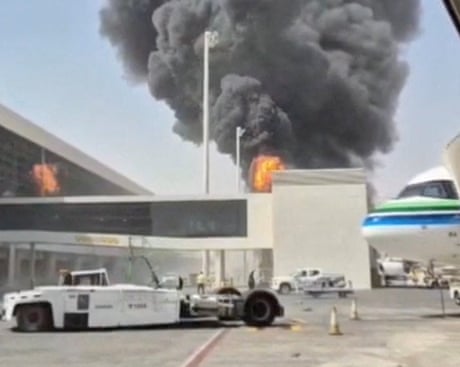
Three Saudis killed in Riyadh airport attack claimed by Houthis
REPORTMiddle East Eye14h ago
Morning update

REPORTAl Jazeera15h ago
Trump says US will not strike Iran before midterm elections
REPORTMiddle East Eye15h ago