
dw.com
centerREPORTIran war : US to escort ships through the Strait of Hormuz
Full BriefGenerated 154d ago
What Happened
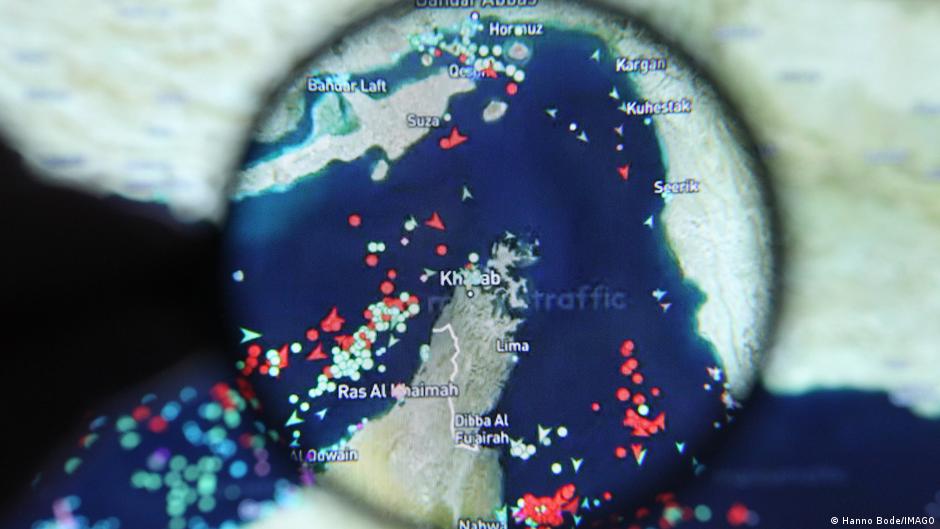
The United States announced it will provide naval escorts for commercial shipping transiting the Strait of Hormuz. The decision follows a period of heightened tensions in the Persian Gulf, though the article does not specify the exact trigger for this deployment or provide details on the scale of the escort operation, the types of vessels involved, or the timeline for implementation. The Strait of Hormuz is a critical chokepoint through which approximately one-fifth of global oil supplies pass, making it a strategic flashpoint in U.S.-Iran relations.
Key Actors
- ·United States(U.S. government and military)Announced the deployment of naval escorts to protect commercial shipping through the Strait of Hormuz amid tensions with Iran.
- ·Iran(Islamic Republic of Iran)Implied adversary in the context of escalating tensions in the Persian Gulf, though specific Iranian actions prompting the U.S. decision are not detailed in the article.
Why It Matters
The Strait of Hormuz is the world's most important oil transit chokepoint, and any disruption to shipping there has immediate global economic consequences. U.S. naval escorts signal a direct American commitment to freedom of navigation in contested waters and raise the risk of direct military confrontation between U.S. and Iranian forces. Historically, Iranian threats to close or disrupt the strait have been met with U.S. military deployments, and the presence of American warships in close proximity to Iranian naval and Revolutionary Guard assets increases the potential for miscalculation or escalation.
Watch For
Monitor for any Iranian response, including statements from the Islamic Revolutionary Guard Corps (IRGC) or Iranian naval maneuvers in the strait. Watch for incidents involving U.S. escort vessels and Iranian fast-attack craft or drones, which have previously harassed commercial shipping. Track whether additional U.S. naval assets are deployed to the region and whether regional allies such as Saudi Arabia or the UAE coordinate their own maritime security measures. Any seizure attempts, close encounters, or weapons discharges will be critical indicators of whether tensions escalate further.
Generated 154d ago · Based on full articleAuto-Compiled
DAILY BRIEFING
Follow Lebanon
Get a daily briefing with the most critical developments from every active conflict zone. Concise. Verified. Free.
No spam. Unsubscribe anytime. Verified sources only.
This page aggregates and summarizes reporting from dw.com. The Conflict Pulse does not author original reporting. Read the original source for full coverage.
CONFLICT OVERVIEW
Lebanon
Latest verified updates on Lebanon, Hezbollah, Israel–Lebanon escalation, southern border fighting, displacement, state authority, and ceasefire diplomacy.
Active since October 2023
MORE REPORTING ON THIS REGION
Recent reporting from this region. These stories may cover different events.
This selection currently contains center-leaning sources.
LATEST FROM LEBANON

REPORTMiddle East Eye4d ago
South Lebanon: 'It's torture, they are razing our lives before our eyes'

REPORTAl Jazeera5d ago
Syria denies officials held ‘secret’ talks with Hezbollah in Turkiye

REPORTMiddle East Eye5d ago
Syria denies that it met Hezbollah in Turkey

REPORTMiddle East Eye6d ago
‘We are stuck here’: In cramped shelters, Lebanon’s displaced dream of their villages

REPORTMiddle East Eye7d ago
US Treasury secretary calls on Lebanon to take 'decisive action' against Iranian financial networks
REPORTMiddle East Eye7d ago