
Jerusalem Post — Iran News
rightREPORT'A paper tiger': Iran sees Saudi, Turkey, Pakistan defense pact as a major win, expert tells 'Post'
Full BriefGenerated 60d ago
What Happened
Experts told The Jerusalem Post that Iran likely views the newly announced Mecca Joint Defense Agreement—a mutual defense pact among Saudi Arabia, Turkey, and Pakistan—as a major success despite its likely ineffectiveness. On the same day the pact was announced, Iranian deputy energy minister Mostafa Rajabi Mashhadi stated Iran would import 450 megawatts of electricity, and the Houthis, an Iranian-backed group, attacked a Saudi oil refinery. Emirati researcher Huda Albadi described the pact as a 'paper tiger' and criticized the signatories for casting Israel as the destabilizing power rather than Iran, which has orchestrated attacks on Gulf states. Iranian Foreign Ministry spokesman Esmaeil Baghaei welcomed the agreement, framing it as a move away from US influence and a united front against 'the Zionist enemy.' Pakistan’s Defense Minister Khawaja Asif separately called for a united military front against Israel. The pact, explicitly built on Islamic relations, may complicate Israeli normalization with Riyadh and reduce Saudi urgency for US security guarantees, according to Dr. Arman Mahmoudian of the University of South Florida.
Key Actors
- ·Iran (via Deputy Energy Minister Mostafa Rajabi Mashhadi and Foreign Ministry Spokesman Esmaeil Baghaei)(Iranian state representatives)Celebrated the pact as a diplomatic win that shifts regional attention away from Iranian aggression and toward Israel as the common enemy.
- ·Saudi Arabia, Turkey, and Pakistan(Signatories of the Mecca Joint Defense Agreement)Pledged mutual defense but have not acted against Iranian-backed attacks, instead allowing anti-Israel rhetoric to dominate the pact's narrative.
- ·Huda Albadi(Emirati researcher and foreign policy expert)Called the pact a 'paper tiger' and warned it reflects a dangerous regional mentality that scapegoats Israel while ignoring Iranian aggression.
- ·Dr. Arman Mahmoudian(Research fellow at the University of South Florida’s Global and National Security Institute)Noted that the pact could reduce Saudi Arabia’s dependence on US security guarantees and diminish the urgency of normalizing ties with Israel.
Why It Matters
The pact signals a potential realignment among Sunni-majority states that may normalize anti-Israel postures while failing to check Iranian and proxy attacks, undermining US influence and Israeli-Saudi normalization prospects. Iran’s ability to frame the agreement as a validation of its regional strategy emboldens its axis of resistance and complicates Western security architectures in the Gulf.
Watch For
Future Houthi or Iranian-backed militia attacks on Saudi or Gulf targets will test the pact’s credibility. Any US or Israeli diplomatic response, including shifts in Saudi normalization talks, should be monitored. The pact’s implementation—whether it remains rhetorical or triggers joint military coordination—will be a key indicator of regional power dynamics.
Generated 60d ago · Based on full articleAuto-Compiled

DAILY BRIEFING
Follow Iran
Get a daily briefing with the most critical developments from every active conflict zone. Concise. Verified. Free.
No spam. Unsubscribe anytime. Verified sources only.
This page aggregates and summarizes reporting from Jerusalem Post — Iran News. The Conflict Pulse does not author original reporting. Read the original source for full coverage.
CONFLICT OVERVIEW
Iran
Latest verified updates on Iran’s regional confrontation, U.S.–Israeli strikes, missile retaliation, proxy networks, sanctions, and Strait of Hormuz risks.
MORE REPORTING ON THIS REGION
Recent reporting from this region. These stories may cover different events.
LATEST FROM IRAN

DEVELOPINGAl Jazeera10h ago
Is Trump signalling a return to war with Iran after the midterms?

DEVELOPINGMiddle East Eye10h ago
Iranian human rights official says legal efforts under way over Minab attack
DEVELOPINGThe Guardian Middle East10h ago
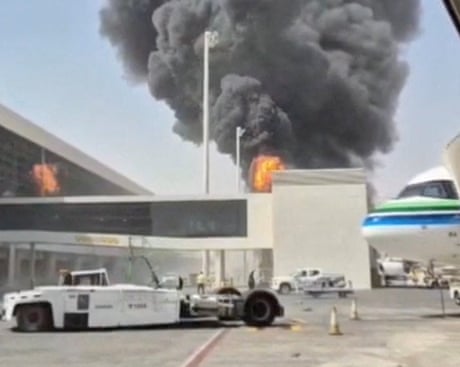
Three Saudis killed in Riyadh airport attack claimed by Houthis
REPORTMiddle East Eye13h ago
Morning update

REPORTAl Jazeera14h ago
Trump says US will not strike Iran before midterm elections
REPORTMiddle East Eye14h ago