
Jerusalem Post — Iran News
rightREPORTIran's demands to reopen Strait of Hormuz echo terms already agreed to in MoU
Full BriefGenerated 60d ago
What Happened
Islamic Revolutionary Guard Corps (IRGC) commander Mohammad Bagher Zolghadr announced six conditions for reopening the Strait of Hormuz on Friday, demanding that the United States end all aggression against Iran, Lebanon, Yemen, Iraq, and Palestine; never verbally threaten Iran; lift its naval blockade and withdraw all naval and air forces; pay for the damages of the wars against Iran; lift all sanctions against Iran; and release all frozen Iranian assets. Foreign Minister Abbas Araghchi confirmed on Sunday that Oman-mediated talks on the strait were 'in final stages,' but stressed that an agreement with Oman does not mean reopening, which remains dependent on fulfilling conditions conveyed through mediators. The demands largely echo provisions of a Memorandum of Understanding signed between the US and Iran on June 17, except for the payment of damages. Analyst Esfandyar Batmanghelidj told the New York Times that Iran seeks to use the strait as a 'commitment mechanism' to ensure implementation, fearing the US would abandon the issue once the strait is opened.
Key Actors
- ·Islamic Revolutionary Guard Corps (IRGC)(Iranian military force responsible for external operations)Commander Mohammad Bagher Zolghadr issued six conditions for reopening the Strait of Hormuz, framing them as prerequisites for any agreement.
- ·Abbas Araghchi(Iranian Foreign Minister)Confirmed Oman-mediated talks are in final stages but insisted reopening depends on fulfillment of conditions transmitted through mediators.
- ·United States(Counterparty to Iran and signatory of the June 17 MoU)Implicitly the target of demands; previous MoU commitments overlap with new conditions, but it has not publicly responded to the latest list.
- ·Oman(Mediator between Iran and the US)Hosting talks that Araghchi described as in final stages, though an agreement does not yet ensure strait reopening.
Why It Matters
The Strait of Hormuz is a crucial maritime chokepoint for global oil transit. Iran is explicitly leveraging its control to extract broader concessions—linking sanctions relief, asset releases, war reparations, and US military withdrawal from the region to the strait's reopening. This transforms the issue from a purely naval standoff into a comprehensive bargaining tool that ties together multiple regional conflicts, potentially reshaping the strategic framework of US-Iran relations and the regional security order.
Watch For
The conclusion of Oman-mediated talks and whether they yield a formal agreement; any US response to the IRGC's conditions—particularly the demand for war damages and behavioral changes; implementation of the June 17 MoU provisions; and Iran's actions in the strait if conditions are not met, including potential escalation or prolonged closure.
Generated 60d ago · Based on full articleAuto-Compiled

DAILY BRIEFING
Follow Iran
Get a daily briefing with the most critical developments from every active conflict zone. Concise. Verified. Free.
No spam. Unsubscribe anytime. Verified sources only.
This page aggregates and summarizes reporting from Jerusalem Post — Iran News. The Conflict Pulse does not author original reporting. Read the original source for full coverage.
CONFLICT OVERVIEW
Iran
Latest verified updates on Iran’s regional confrontation, U.S.–Israeli strikes, missile retaliation, proxy networks, sanctions, and Strait of Hormuz risks.
MORE REPORTING ON THIS REGION
Recent reporting from this region. These stories may cover different events.
LATEST FROM IRAN

DEVELOPINGAl Jazeera10h ago
Is Trump signalling a return to war with Iran after the midterms?

DEVELOPINGMiddle East Eye10h ago
Iranian human rights official says legal efforts under way over Minab attack
DEVELOPINGThe Guardian Middle East10h ago
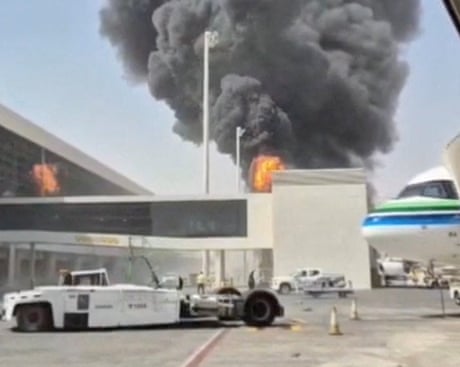
Three Saudis killed in Riyadh airport attack claimed by Houthis
REPORTMiddle East Eye13h ago
Morning update

REPORTAl Jazeera14h ago
Trump says US will not strike Iran before midterm elections
REPORTMiddle East Eye14h ago