
Middle East Eye
centerREPORTIran declares Islamabad agreement suspended, blames US violations
Full BriefGenerated 108d ago
What Happened
Iranian Deputy Foreign Minister Kazem Gharibabadi announced on Saturday that Tehran has suspended all of its commitments under the Islamabad Memorandum of Understanding (MoU), a Pakistan-mediated 14-point agreement signed in June to de-escalate hostilities with the United States. Gharibabadi accused the US of violating and suspending its own commitments, stating Iran was no longer implementing the accord and was focused on defending the country. The MoU had included provisions to reopen the Strait of Hormuz, lift the US naval blockade, and begin a phased de-escalation.
The suspension comes amid ongoing military exchanges: Iran's health ministry reported that US attacks since 6 July have killed at least 50 people and wounded over 500. Overnight US strikes damaged a desalination facility in Iran, disrupting drinking water for approximately 10,000 people. The Islamic Revolutionary Guard Corps (IRGC) warned countries hosting US forces of a 'corresponding response', while Bahrain sounded air raid sirens and Kuwaiti forces intercepted incoming missiles and drones.
Key Actors
- ·Kazem Gharibabadi(Iranian Deputy Foreign Minister)Announced Iran's suspension of the Islamabad MoU, blaming US violations and stating Iran is now focused on self-defense.
- ·Islamic Revolutionary Guard Corps (IRGC)(Iranian military force)Warned that countries hosting US forces would face a 'corresponding response' amid ongoing hostilities.
- ·United States(Party to the Islamabad MoU)Accused by Iran of breaching the MoU while continuing military strikes that Iran says have killed 50 and wounded over 500.
Why It Matters
The collapse of the Islamabad MoU removes the primary diplomatic channel for de-escalation between the US and Iran, raising the risk of a wider conflict. With the Strait of Hormuz closure reversed by the deal, renewed naval tensions could threaten global oil shipments. The IRGC's threat to target US-hosting nations signals potential regional spillover, endangering allies like Bahrain and Kuwait.
Watch For
Monitor for US reaction to Iran's suspension; any formal US statement on the MoU's status; potential IRGC strikes on countries hosting US forces; further US military actions in Iran; naval movements in the Strait of Hormuz; and mediation efforts by Pakistan or other parties to revive the agreement.
Generated 108d ago · Based on full articleAuto-Compiled

DAILY BRIEFING
Follow Iran
Get a daily briefing with the most critical developments from every active conflict zone. Concise. Verified. Free.
No spam. Unsubscribe anytime. Verified sources only.
This page aggregates and summarizes reporting from Middle East Eye. The Conflict Pulse does not author original reporting. Read the original source for full coverage.
CONFLICT OVERVIEW
Iran
Latest verified updates on Iran’s regional confrontation, U.S.–Israeli strikes, missile retaliation, proxy networks, sanctions, and Strait of Hormuz risks.
MORE REPORTING ON THIS REGION
Recent reporting from this region. These stories may cover different events.
left
US strikes Iran’s Qeshm Island as Vance voices optimism about a deal
The Guardian Middle EastTrump’s troubles with Iran could open the door to China
The Guardian AsiaLATEST FROM IRAN

DEVELOPINGAl Jazeera9h ago
Yemen gov’t accuses IRGC, Hezbollah of sending 21 experts to back Houthis

DEVELOPINGMiddle East Eye9h ago
Iran says US ceasefire proposal 'insufficient' as strikes are reported on Qeshm Island
REPORTJerusalem Post — Iran News13h ago
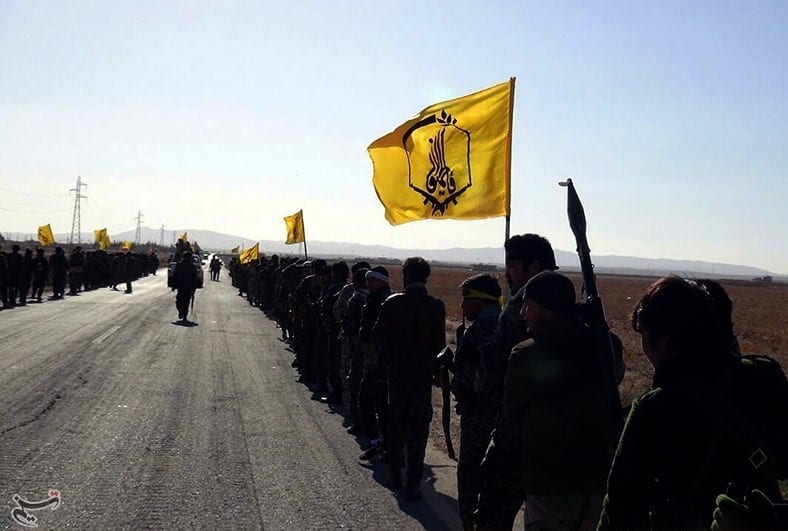
IRGC-backed Fatemiyoun gunmen killed in clashes at school used as training ground
REPORTDW News15h ago
Can US midterm election really change Trump's Iran policy?

REPORTJerusalem Post — Iran News15h ago
US, Iran reviewing proposals to bridge differences, end war, Qatar mediators announce
REPORTThe Guardian Middle East18h ago