
Jerusalem Post — Iran News
rightREPORTIran can still produce 50 ballistic missiles a month, despite US-Israeli strikes - report
Full BriefGenerated 10d ago
What Happened
According to a Wednesday Bloomberg report, an intelligence estimate assessed that Iran can still build approximately 50 ballistic missiles per month—roughly half its pre-war capacity—despite US-Israeli airstrikes in operations Roaring Lion and Epic Fury, economic sanctions, and a blockade. A Western official citing military intelligence reports said the Islamic Republic of Iran 'likely has at least 1,700 ballistic missiles remaining' and is building more every day. Jim Lamson, a research fellow at King’s College London and former CIA Middle East analyst, told Bloomberg there could also be thousands of Shahed-type strike weapons remaining.
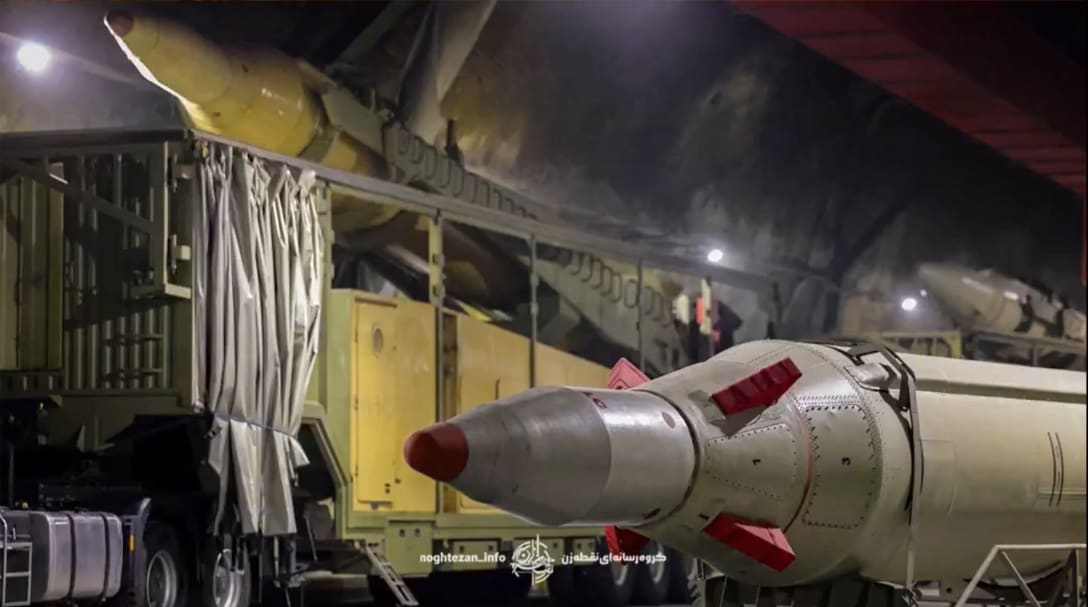
In parallel, the IRGC unveiled an underground 'missile city' containing Fatah-1 medium-range ballistic missiles, cruise missiles, and launchers. Maj.-Gen. Ali Abdollahi, identified as Chief of Staff of Iran's Armed Forces, said advanced missiles would 'surprise enemies' and that Iran's response would extend beyond the region if attacked again. The IRGC also presented a Fatah-2 hypersonic missile, claimed to reach 18,500 km/h in parts of flight, after Israel's Rafael Advanced Defense Systems unveiled its Super Ice cruise missile. Iran has abandoned its self-imposed 2,000-kilometer missile range limit and is threatening US bases in Europe, according to the Institute for the Study of War.
Key Actors
- ·IRGC(Islamic Revolutionary Guard Corps, branch of Iran's armed forces responsible for missile and external operations)Unveiled an underground missile city with Fatah-1 ballistic missiles and presented a Fatah-2 hypersonic missile in response to Israel's Super Ice cruise missile.
- ·US-Israeli coalition(United States and Israel joint military campaign against Iran)Conducted airstrikes under operations Roaring Lion and Epic Fury and imposed sanctions and a blockade, reducing but not eliminating Iran's missile production.
- ·Benjamin Netanyahu(Prime Minister of Israel)Claimed in March that Iran had no ability to produce ballistic missiles, while preparing to resume strikes.
- ·Donald Trump(President of the United States)Stated on November 9 that nearly 85% of Iran's manufacturing capability was destroyed and warned US forces remain ready.
Why It Matters
The estimate challenges US and Israeli claims of strategic success in degrading Iran's missile industrial base. Iran's residual capacity—50 missiles per month, 1,700 ballistic missiles, thousands of Shahed drones—means it could resume hostilities in force, extend strike range beyond 2,000 km, and threaten US bases in Europe. The IRGC's public unveilings are intended to signal survivability and deter renewed strikes, while the reported abandonment of the range limit raises risk of direct longer-range confrontation.
Watch For
Monitor whether the United States or Israel act on reported preparations to resume strikes, especially after claims that Iran's nuclear weapons program advanced; watch for further IRGC missile unveilings or tests, including operational use of the Fatah-2 or longer-range systems; track Institute for the Study of War assessments on Iran's threat to US bases in Europe; and note any statements by Netanyahu, Trump, or Iranian military officials that signal a shift toward renewed hostilities.
Generated 10d ago · Based on full articleAuto-Compiled
This page aggregates and summarizes reporting from Jerusalem Post — Iran News. The Conflict Pulse does not author original reporting. Read the original source for full coverage.
CONFLICT OVERVIEW
Iran
Latest verified updates on Iran’s regional confrontation, U.S.–Israeli strikes, missile retaliation, proxy networks, sanctions, and Strait of Hormuz risks.
MORE REPORTING ON THIS REGION
Recent reporting from this region. These stories may cover different events.
LATEST FROM IRAN

DEVELOPINGMiddle East Eye8h ago
Two supertankers hit mines near Hormuz, Iranian navy says

DEVELOPINGAl Jazeera11h ago
Iran unveils dual-missile launcher, new ‘missile city’: What to know

REPORTMiddle East Eye12h ago
Saudi Arabia, Qatar join condemnation of Iran attack on Bahrain

REPORTMiddle East Eye17h ago
Morning update
REPORTMiddle East Eye23h ago
Pezeshkian says Iran engaged in 'silent economic war' as blockade completes 130 days

REPORTAl Jazeera1d ago