DW News
centerREPORTIran after the war — fragile peace, shattered economy
Full BriefGenerated 4h ago
What Happened
Following the signing of an interim peace deal to end the Iran war, the US lifted restrictions on Iranian oil trade until August 21 as part of the peace framework. US President Donald Trump stated that approximately $6 billion in frozen Iranian oil revenues would be released, but conditioned the funds on purchases of US agricultural products, a claim Tehran denies. Iran’s Economy and Finance Minister Seyed Ali Madanizedah said the government had borrowed heavily from the central bank to cover war costs, which would boost inflation, and that a US agreement would not fully normalize the economy. The war caused an estimated €229 billion in damages, and a Memorandum of Understanding mentions a $300 billion payout for reconstruction, though details remain unclear. Domestically, prices of basic goods such as eggs have tripled, and an Interior Ministry-affiliated survey found 60% of respondents could no longer cope with the economic crisis, prompting warnings from President Masoud Pezeshkian and agency head Mohammad Bathaei about potential street protests.
Key Actors
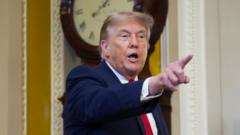
- ·Donald Trump(US President)Stated the US lifted sanctions on Iranian oil trade until August 21 and conditioned release of $6 billion in frozen funds on purchases of American corn, wheat, and soybeans.
- ·Seyed Ali Madanizedah(Iranian Economy and Finance Minister)Acknowledged government borrowing from the central bank will cause inflation and said a US agreement would not fully normalize Iran's economy.
- ·Masoud Pezeshkian(Iranian President)Warned that economic needs could lead to street protests, stating the government cannot sufficiently meet the population's needs.
- ·Mohammad Bathaei(Head of Interior Ministry-affiliated agency, former Education Minister)Warned of widespread tensions based on a survey showing 60% of respondents unable to cope with the economic crisis and 80% feeling treated unjustly.
Why It Matters
The article highlights the fragility of the post-war peace in Iran, where even with sanctions relief and reconstruction pledges, deep economic scars from years of sanctions, corruption, war damage, and port blockades persist. The conditional aid mechanism and uncertainty over reconstruction funds leave the regime vulnerable to public discontent, with warnings of protests from both top officials and survey data. The stability of Iran’s political system remains precarious, and any renewed unrest could reverberate through regional alignments and negotiations.
Watch For
Monitor the August 21 deadline for the oil trade sanctions relief; whether Iran accepts US conditions on the $6 billion release; the release of official inflation data and exchange rate movements; any signs of public protests as warned by President Pezeshkian; and clarification of the $300 billion reconstruction fund mentioned in the Memorandum of Understanding.
Generated 4h ago · Based on full articleAuto-Compiled
This page aggregates and summarizes reporting from DW News. The Conflict Pulse does not author original reporting. Read the original source for full coverage.
CONFLICT OVERVIEW
Iran
Latest verified updates on Iran’s regional confrontation, U.S.–Israeli strikes, missile retaliation, proxy networks, sanctions, and Strait of Hormuz risks.
SOURCE PERSPECTIVES
How outlets across the bias spectrum are covering this conflict.
LATEST FROM IRAN