
The Guardian Middle East
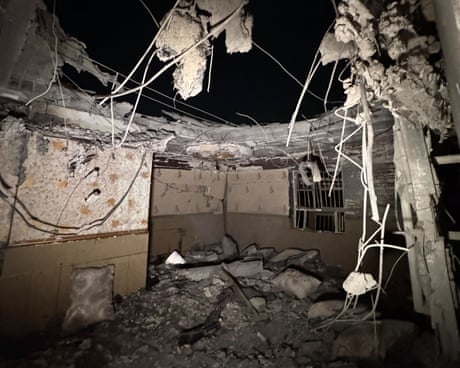
leftREPORTIran accuses US of ‘war crime’ after missile blast kills four people at wedding
Full BriefGenerated 18d ago
What Happened
A missile strike in Kuhestak, Hormozgan province, killed at least four people and injured 68 at a wedding ceremony on Tuesday. Iranian state media and officials, including the Foreign Ministry, attributed the strike to the United States, labeling it a war crime. Independent weapons analyst Trevor Ball identified remnants found at the site as components of a Boeing-manufactured Standoff Land Attack Missile-Expanded Response (Slam-Er). The strike occurred amid a broader exchange of hostilities, with US Central Command (Centcom) reporting that its operations targeted Iranian air defense sites, radars, and maritime assets. In response, Iran launched drones and missiles at US bases in Bahrain, Kuwait, and the UAE.
Key Actors
- ·Centcom(United States military command)Stated that the US military does not target civilians and that its strikes focused on Iranian military infrastructure.
- ·Mohammad Baqer Ghalibaf(Chief Iranian negotiator)Condemned the strike as a criminal act and characterized the US as the 'great Satan'.
- ·Lt Col Ebrahim Zolfaghari(Iranian military spokesperson)Vowed that Iran would conduct heavier and more devastating retaliation against the US.
Why It Matters
The strike marks a significant escalation in the ongoing conflict between the US and Iran, effectively ending a month-long period of relative calm. The targeting of infrastructure along the coast is part of a US effort to degrade Iranian capabilities to enforce a blockade on the Strait of Hormuz, a critical maritime chokepoint for global oil transit. The involvement of civilian casualties at a wedding ceremony risks further hardening domestic Iranian sentiment and complicates the strategic calculus for both nations as they engage in direct exchanges of fire.
Watch For
Monitor for further Iranian retaliatory strikes against US assets in the Middle East, as promised by military leadership. Additionally, observe the impact of the damaged telecommunications and radar infrastructure on Iran's ability to maintain its blockade of the Strait of Hormuz, and any subsequent diplomatic responses from the US administration regarding the reported civilian casualties.
Generated 18d ago · Based on full articleAuto-Compiled
This page aggregates and summarizes reporting from The Guardian Middle East. The Conflict Pulse does not author original reporting. Read the original source for full coverage.
CONFLICT OVERVIEW
Iran
Latest verified updates on Iran’s regional confrontation, U.S.–Israeli strikes, missile retaliation, proxy networks, sanctions, and Strait of Hormuz risks.
SOURCE PERSPECTIVES
How outlets across the bias spectrum are covering this conflict.
LATEST FROM IRAN

DEVELOPINGMiddle East Eye11h ago
Trump tells Tehran to 'behave' and lays out three options on ending war on Iran

REPORTAl Jazeera13h ago
What’s behind Iranian authorities’ push for a mass mobilisation campaign?

REPORTAl Jazeera14h ago
Postponing the future: War and inflation redraw marriage terms in Iran

REPORTAl Jazeera15h ago
What are Iran’s latest conditions to end its war with the US?
REPORTMiddle East Eye18h ago
Ghalibaf: Iran must ‘fight and negotiate’ as war with US drags on
REPORTMiddle East Eye18h ago