
The Guardian Middle East
leftREPORTGulf states postpone strait of Hormuz talks with Iran as Yemen conflict intensifies
Full BriefGenerated 22d ago
What Happened
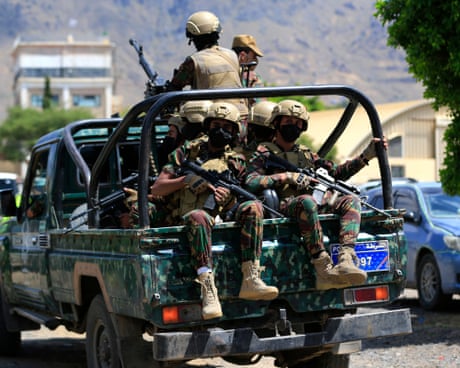
Gulf Cooperation Council (GCC) states have postponed a planned meeting with Iran regarding the Strait of Hormuz, citing a lack of regional consensus and escalating hostilities. The decision follows a series of security incidents, including a Houthi missile and drone strike on the King Khalid airbase in Khamis Mushait and the destruction of a Saudi east-west pipeline pumping station near Al Mesba’ah, which Vantor Technologies satellite imagery confirmed as severely damaged. Additionally, Houthi forces have seized control of the Bab al-Mandab strait, prompting Saudi Arabia to seek military assistance from the United States. Iran’s Foreign Ministry has denied involvement in the pipeline attack or the recent Houthi military operations in Yemen.
Key Actors
- ·Houthis(Yemeni militant group)The group has seized the Bab al-Mandab strait and claimed responsibility for strikes on Saudi military and energy infrastructure.
- ·Saudi Arabia(Gulf state and regional power)The government is seeking military assistance from the United States to counter Houthi advances and Iranian-backed militia activity.
- ·Iran(Regional state actor)Tehran maintains preconditions for reopening the Strait of Hormuz, including the lifting of oil port blockades and the release of frozen assets.
- ·Oman(Regional mediator)Foreign Minister Sayyid Badr Albusaidi confirmed the postponement of the GCC-Iran talks, citing a need for regional consensus.
Why It Matters
The postponement of diplomatic talks and the Houthi seizure of the Bab al-Mandab strait have disrupted critical maritime chokepoints, contributing to a rise in oil prices to over $108 per barrel. The inability of regional powers to reach a consensus on the Strait of Hormuz, combined with the destruction of Saudi energy infrastructure, underscores the fragility of regional security and the increasing difficulty of managing proxy-driven escalations.
Watch For
Monitor for further Saudi military responses to the Houthi advance in Yemen and potential shifts in US military posture following discussions between Crown Prince Mohammed bin Salman and Adm Brad Cooper. Additionally, observe whether the GCC-Iran diplomatic channel remains suspended or if Oman can facilitate a rescheduled meeting to address the status of commercial shipping routes.
Generated 22d ago · Based on full articleAuto-Compiled
DAILY BRIEFING
Follow Iran
Get a daily briefing with the most critical developments from every active conflict zone. Concise. Verified. Free.
No spam. Unsubscribe anytime. Verified sources only.
This page aggregates and summarizes reporting from The Guardian Middle East. The Conflict Pulse does not author original reporting. Read the original source for full coverage.
CONFLICT OVERVIEW
Iran
Latest verified updates on Iran’s regional confrontation, U.S.–Israeli strikes, missile retaliation, proxy networks, sanctions, and Strait of Hormuz risks.
MORE REPORTING ON THIS REGION
Recent reporting from this region. These stories may cover different events.
LATEST FROM IRAN

DEVELOPINGMiddle East Eye11h ago
Saudi Aramco chief warns of 'scarily thin’ global oil stockpiles, amid war on Iran
REPORTMiddle East Eye12h ago
UN chief arrives in Pakistan for talks on mediation efforts between US, Iran
REPORTMiddle East Eye13h ago
Hormuz Strait disruptions could lead to global food security crisis

REPORTMiddle East Eye20h ago
Houthis target Riyadh airpot, declare Saudi airspace open target except for holy sites

REPORTAl Jazeera23h ago
Trump blames Democrats and Ukraine for soaring US fuel prices, not Iran war
REPORTDW News1d ago