
The Guardian Europe
leftREPORTGermany is right to rearm. But Europe has well-founded fears about that | Paul Taylor
Full BriefGenerated 13d ago
What Happened
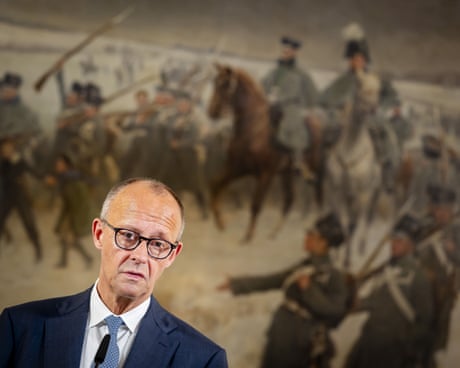
Chancellor Friedrich Merz has initiated a significant shift in German defense policy, aiming to establish the Bundeswehr as Europe's strongest conventional army by 2039. This rearmament effort, outlined in a defense strategy released in April, includes planned arms purchases totaling €123.3 billion. While the government has deployed a brigade to Lithuania and leads the European Sky Shield initiative, critics and analysts note that Berlin is prioritizing national and US-sourced defense procurement over European collaborative projects, having recently scrapped joint fighter and tank development programs with France.
Key Actors
- ·Friedrich Merz(Chancellor of Germany)Advocates for the expansion of German conventional military capabilities while rejecting joint European defense bonds.
- ·Liana Fix(Senior Fellow at the Council on Foreign Relations)Argues that German rearmament must be embedded within European industrial and military structures to prevent regional instability.
- ·Andrius Kubilius(EU Defence Commissioner)Criticizes the tendency of European nations, including Germany, to favor national defense contractors over competitive, cross-border tenders.
Why It Matters
The rapid expansion of German military power, occurring alongside potential shifts in US security commitments to NATO and the rise of the nationalist AfD party, has created diplomatic friction with France and Poland. The lack of integration in European defense procurement threatens to undermine the cohesion of the EU's security architecture and risks reviving historical anxieties regarding German regional dominance.
Watch For
Future developments in German defense procurement, specifically whether Berlin shifts toward collaborative European projects or continues prioritizing national and US-made systems. Additionally, monitor the electoral performance of the AfD, as their platform includes opposition to Ukraine aid and potential withdrawal from the EU, which would fundamentally alter Germany's role in the Western security order.
Generated 13d ago · Based on full articleAuto-Compiled
DAILY BRIEFING
Follow United States
Get a daily briefing with the most critical developments from every active conflict zone. Concise. Verified. Free.
No spam. Unsubscribe anytime. Verified sources only.
This page aggregates and summarizes reporting from The Guardian Europe. The Conflict Pulse does not author original reporting. Read the original source for full coverage.
CONFLICT OVERVIEW
United States
Latest verified updates on U.S. military operations, foreign policy decisions, alliance pressure, sanctions, maritime security, and global power projection.
Active since May 2020
MORE REPORTING ON THIS REGION
Recent reporting from this region. These stories may cover different events.
LATEST FROM UNITED STATES

REPORTAl Jazeera1d ago
Trump signs order launching women’s health division at NIH, White House

REPORTAl Jazeera2d ago
No ‘turmoil’ at the White House

REPORTAl Jazeera3d ago
Why Trump’s latest White House press secretary lasted just five days

REPORTBBC US & Canada4d ago
Katie Zacharia leaving White House role less than five days into job

REPORTAl Jazeera4d ago
White House press secretary Katie Zacharia fired after five days on the job

REPORTAl Jazeera5d ago