
The Guardian Middle East
leftREPORTFirst Thing: Trump calls Iran’s leaders ‘scum’ and declares fragile ceasefire over
Full BriefGenerated 75d ago
What Happened
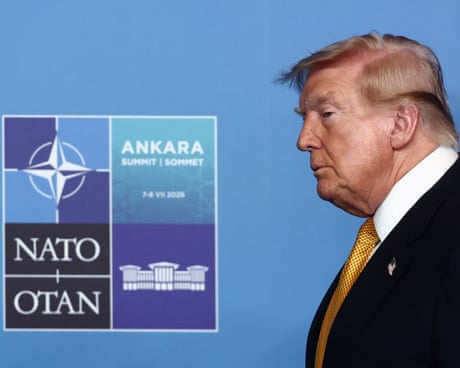
On Wednesday, the US military struck more than 80 targets around the Strait of Hormuz, according to the US military, in response to Iranian attacks on three commercial vessels transiting the strait a day earlier. Washington also revoked a temporary sanctions waiver for Iranian oil exports. President Donald Trump, speaking at a NATO summit in Ankara, declared the ceasefire memorandum of understanding with Iran over, calling Iran's leaders 'vicious, violent people' and 'scum', but indicated talks might continue. Iran's Islamic Revolutionary Guard Corps (IRGC) claimed it had launched attacks on US military sites in Bahrain and Kuwait, hitting 85 facilities. NATO Secretary General Mark Rutte backed the US strikes, stating Iran was violating the ceasefire. Oil prices rose 3% immediately after the escalation.
Key Actors
- ·Donald Trump(US President)Declared the ceasefire with Iran over and insulted its leaders as 'scum', while hinting that negotiations could continue.
- ·Islamic Revolutionary Guard Corps (IRGC)(Iranian military force responsible for external operations)Claimed to have targeted 85 US military facilities in Bahrain and Kuwait in retaliation for US strikes.
- ·Mark Rutte(NATO Secretary General)Backed the US military response, asserting Iran had violated the ceasefire and that a forceful reaction was crucial.
Why It Matters
The collapse of the fragile ceasefire and direct military exchanges between the US and Iran raise the risk of a broader conflict that could threaten shipping through the critical Strait of Hormuz channel and destabilize global energy markets. Trump's inflammatory rhetoric and the revocation of the oil waiver signal a possible return to 'maximum pressure,' potentially isolating Iran further and increasing tensions with allies who may be caught in the crossfire.
Watch For
Monitor whether further tit-for-tat strikes occur between US and Iranian forces in the Gulf, and whether oil prices sustain their increase. Track any resumption of backchannel diplomacy—possibly via Oman—given Trump's suggestion that talks might continue. Also watch for statements from other NATO members and regional states on the escalation.
Generated 75d ago · Based on full articleAuto-Compiled
This page aggregates and summarizes reporting from The Guardian Middle East. The Conflict Pulse does not author original reporting. Read the original source for full coverage.
CONFLICT OVERVIEW
Iran
Latest verified updates on Iran’s regional confrontation, U.S.–Israeli strikes, missile retaliation, proxy networks, sanctions, and Strait of Hormuz risks.
SOURCE PERSPECTIVES
How outlets across the bias spectrum are covering this conflict.
left
Middle East crisis live: Iran’s Revolutionary Guards warns it will ‘change geography of war’ if US escalates conflict
The Guardian Middle EastTuesday briefing: Europe thinks Russia is preparing to test Nato’s limits
The Guardian EuropeLATEST FROM IRAN
DEVELOPINGThe Guardian Middle East11h ago
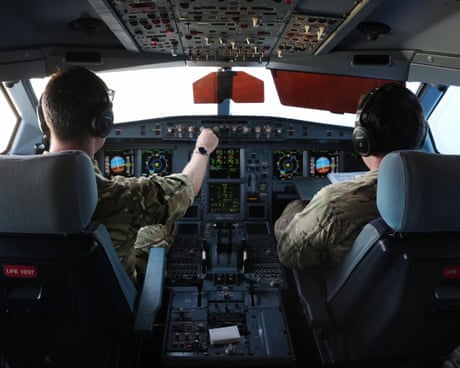
UK to give support to Saudi jets in attempt to counter Houthi fighters

REPORTJerusalem Post — Iran News12h ago
Iran says it has new targets, weapons ready if US launches new attack, Fars news says - report

REPORTAl Jazeera13h ago
Trump approval rating hits career low of 32% amid Iran war, high costs

REPORTMiddle East Eye14h ago
US Treasury chief says Iran airlines to be 'shut down' 23 September
REPORTMiddle East Eye14h ago
US refuses visas for Iran UN delegation members

REPORTMiddle East Eye16h ago