
The Guardian Europe
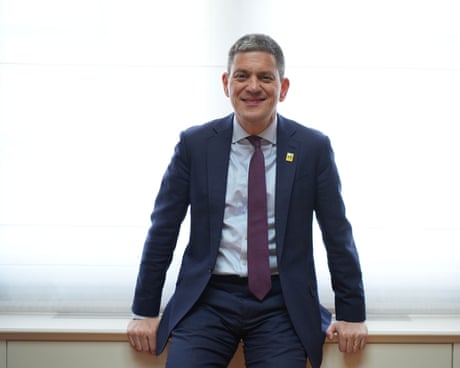
leftREPORTDavid Miliband: Europe and US need ‘separate bedrooms’ but not divorce
Full BriefGenerated 126d ago
What Happened
David Miliband, former UK Foreign Secretary and current president of the International Rescue Committee, stated at the Hay literary festival on Sunday that Europe should maintain "separate bedrooms" from the United States rather than pursue a complete "divorce" from the transatlantic alliance. Miliband's remarks address the strain on US-European relations under the Trump administration, advocating for strategic autonomy while preserving core alliance structures. He warned that complete disengagement carries the potential "for us to end up in a very, very difficult position," suggesting Europe must balance independence on certain policy areas with continued cooperation on fundamental security and diplomatic issues.
Key Actors
- ·David Miliband(Former UK Foreign Secretary (2007-2010), current president of the International Rescue Committee)Advocates for European strategic autonomy from the US while maintaining the transatlantic alliance framework, warning against complete disengagement
- ·Trump administration(Current US executive government)Identified as the source of strain on traditional US-European alliance relations, prompting debate over Europe's strategic posture
Why It Matters
Miliband's intervention reflects a broader European debate over transatlantic relations as Trump-era policies challenge post-World War II alliance structures. The "separate bedrooms" formulation captures the tension between European calls for strategic autonomy—particularly on defense spending, trade policy, and China relations—and the continued reliance on US security guarantees through NATO. As a former senior UK diplomat now leading a major humanitarian organization, Miliband's position signals concern among transatlantic policy elites that complete decoupling could undermine collective Western leverage on global crises, from Ukraine to Middle East conflicts, while Europe lacks the independent military and diplomatic capacity to replace US engagement.
Watch For
Monitor upcoming NATO summits and European Council meetings for concrete policy shifts toward strategic autonomy, including defense procurement decisions, EU-US trade negotiations, and coordination on China policy. Watch whether European governments increase defense budgets and joint military capabilities as hedges against US unreliability, or whether the alliance framework remains intact despite rhetorical distance. Track statements from other former senior officials and current European leaders on transatlantic relations as indicators of whether Miliband's "separate bedrooms" framing gains traction as a middle path between full alignment and rupture.
Generated 126d ago · Based on full articleAuto-Compiled
DAILY BRIEFING
Follow United States
Get a daily briefing with the most critical developments from every active conflict zone. Concise. Verified. Free.
No spam. Unsubscribe anytime. Verified sources only.
This page aggregates and summarizes reporting from The Guardian Europe. The Conflict Pulse does not author original reporting. Read the original source for full coverage.
CONFLICT OVERVIEW
United States
Latest verified updates on U.S. military operations, foreign policy decisions, alliance pressure, sanctions, maritime security, and global power projection.
Active since May 2020
MORE REPORTING ON THIS REGION
Recent reporting from this region. These stories may cover different events.
LATEST FROM UNITED STATES

REPORTAl Jazeera4d ago
How does Trump’s White House AI accord work?

REPORTAl Jazeera5d ago
Hegseth to cut number of US general and admiral positions by 20%

REPORTBBC US & Canada5d ago
Three takeaways from Trump's 'Super Intelligence' summit

REPORTAl Jazeera7d ago
Anthropic CEO Amodei to have dinner with Trump at White House

REPORTAl Jazeera8d ago
China, US to open AI ‘communication channel’ after summit, White House says

REPORTAl Jazeera9d ago