DW News
centerREPORTDoes the Iran war diminish US superpower status?
Full BriefGenerated 8d ago
What Happened
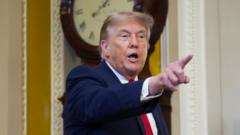
On June 14, 2026, US President Donald Trump announced via social media that a deal had been reached with Iran to end the conflict he and Israel launched more than three months prior. He declared the toll-free reopening of the Strait of Hormuz, pending the signing of a memorandum of understanding (MoU) in Geneva later in the week. Unconfirmed reports in Iranian state-affiliated Fars news agency claimed that 'Iranian-Omani sovereignty over the Strait of Hormuz' had been inserted into negotiations and that the US had 'accepted' that fees would be paid to Iran. US Vice President JD Vance, in a CNBC interview, stated that Washington's 'expectation is that the strait is going to be opened in a toll-free way for the long term,' while acknowledging that details would be worked out in technical talks. The conflict had decimated Iran's conventional navy—the Center for International and Strategic Studies (CSIS) assessed that 'Iran lost the majority of its naval capability in less than 10 days'—but Iran used drones, mines, and its regional proxies to disrupt Gulf shipping and energy facilities. The deal reportedly includes the release of $12 billion in frozen Iranian funds before nuclear talks begin, though the US denies this.
Key Actors
- ·Donald Trump(President of the United States)Announced the deal with Iran and authorized the toll-free reopening of the Strait of Hormuz, stating, 'Let the oil flow!'
- ·Iran(Islamic Republic of Iran)Negotiating the MoU with the US, reportedly asserting sovereignty over the Strait of Hormuz and claiming the right to collect transit fees.
- ·JD Vance(Vice President of the United States)Stated the US expectation that the strait will be opened toll-free in the long term but that details remain subject to technical negotiations.
Why It Matters
The war and its aftermath have exposed the limits of American military power: despite overwhelming force, the US proved unable or unwilling to coerce Iran into reopening the strait without concessions. This undercuts US credibility as the guarantor of freedom of navigation and the rules-based trade order, with Iran now wielding new leverage over global oil flows. The conflict also rattled Gulf allies, whose energy infrastructure was left vulnerable to Iranian asymmetric attacks, sowing doubt about US security commitments. If the deal codifies Iranian control or fee extraction over the strait, it would mark a strategic defeat for Washington and a shift in regional power dynamics.
Watch For
The MoU signing in Geneva later this week; whether the text is released and specifies tolls, fees, or joint sovereignty; Iran's receipt of frozen funds; the impact on shipping insurance and traffic through Hormuz; the resumption of nuclear negotiations; and the reaction of Gulf states and Israel to the deal's terms.
Generated 8d ago · Based on full articleAuto-Compiled
This page aggregates and summarizes reporting from DW News. The Conflict Pulse does not author original reporting. Read the original source for full coverage.
CONFLICT OVERVIEW
Iran
Latest verified updates on Iran’s regional confrontation, U.S.–Israeli strikes, missile retaliation, proxy networks, sanctions, and Strait of Hormuz risks.
SOURCE PERSPECTIVES
How outlets across the bias spectrum are covering this conflict.
LATEST FROM IRAN