
The Guardian Africa
leftREPORTCurse of the Nile’s gold: how Sudan is losing its fertile fields and ability to produce food
Full BriefGenerated 9d ago
What Happened
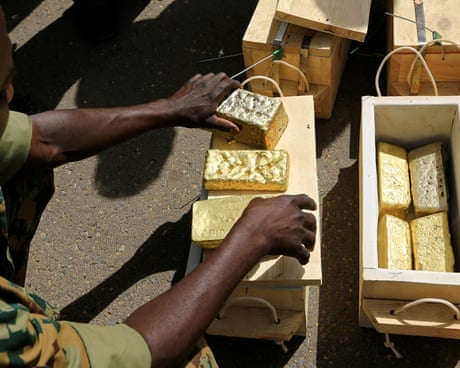
Artisanal gold mining in Abu Hamad, River Nile state, has expanded to account for over 90% of Sudan's gold production in 2024, leading to severe environmental degradation and the collapse of local agriculture. The use of toxic chemicals like mercury, cyanide, and thiourea in processing tailings has resulted in soil salinity spikes, contaminated water supplies, and reports of congenital abnormalities in livestock and humans. Local farmers report that wheat yields have dropped from 40-60 sacks per acre to 12-18 sacks, while orange production has plummeted, threatening food security beyond the local level.
Key Actors
- ·Sudanese Armed Forces (SAF)(State military and de-facto government)The SAF controls gold-producing areas and relies on the sector for revenue, with critics alleging the military perpetuates the war to maintain unregulated access to these funds.
- ·Rapid Support Forces (RSF)(Paramilitary group)The RSF maintains control over various mining sites and utilizes the gold trade to finance its operations, though production levels in its territory remain undocumented.
- ·Sudan Transparency and Policy Tracker(Research thinktank)Researcher Suliman Baldo reports that both the SAF and RSF are heavily involved in controlling mining operations to generate war revenue.
- ·Mubarak al-Fadil al-Mahdi(Head of the Umma party and former investment minister)Al-Mahdi claims that the lack of oversight on gold revenues provides a direct financial incentive for the warring parties to continue the conflict.
Why It Matters
The unregulated gold sector serves as a primary financial lifeline for both the SAF and RSF, directly incentivizing the continuation of the civil war. The environmental destruction in River Nile state, a region currently under SAF control, demonstrates how the war economy is permanently eroding Sudan's long-term agricultural capacity and public health, creating a secondary humanitarian crisis that will persist regardless of the conflict's outcome.
Watch For
Monitor for further reports on the expansion of mining waste during the rainy season, which historically causes toxic runoff to spread into residential areas. Additionally, watch for any shifts in gold export data or international pressure regarding the illicit trade of Sudanese gold, which currently bypasses formal oversight and fuels the ongoing military stalemate.
Generated 9d ago · Based on full articleAuto-Compiled
This page aggregates and summarizes reporting from The Guardian Africa. The Conflict Pulse does not author original reporting. Read the original source for full coverage.
CONFLICT OVERVIEW
Sudan / Darfur
Latest verified updates on Sudan’s SAF–RSF war, Darfur atrocities, displacement, famine risk, and diplomatic efforts.
Active since April 2023
SOURCE PERSPECTIVES
How outlets across the bias spectrum are covering this conflict.
LATEST FROM SUDAN / DARFUR

REPORTAl Jazeera5d ago
Sudan aid networks at risk of collapse, UN agencies warn

REPORTAl Jazeera8d ago
UN extends partial Sudan arms embargo for a month

REPORTAl Jazeera10d ago
Hundreds of thousands lack adequate shelter at Sudan’s Tawila camp

REPORTBBC Africa12d ago
Sudan's healthcare system on brink of collapse after cuts, medical charity warns

REPORTAl Jazeera12d ago
Sudan’s healthcare system on brink of collapse, MSF warns

REPORTAl Jazeera15d ago